
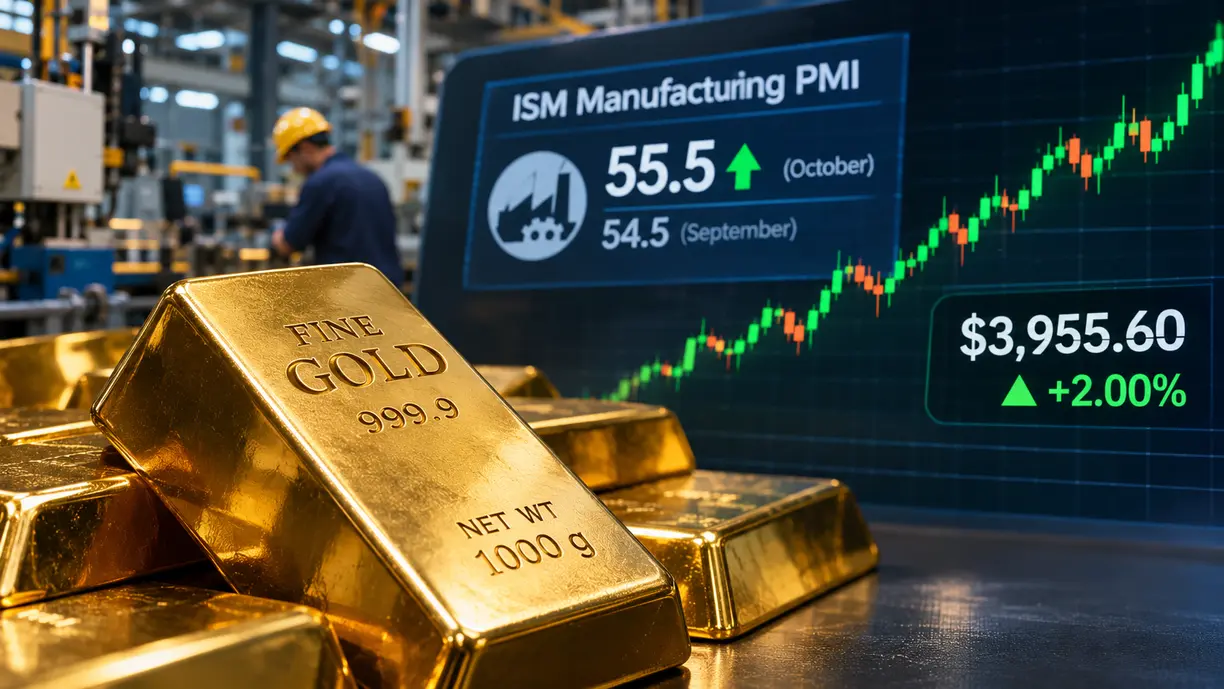
(Kitco News) - The gold market is seeing a solid start to the week; however, strong activity in the manufacturing sector, coupled with persistent inflation, highlights ongoing risks for the precious metal.
The Institute for Supply Management (ISM) announced Monday that its Manufacturing Purchasing Managers Index rose to 55.5 in October, up from 54.5 in September. The headline number came in better than expected, as consensus forecasts called for an unchanged reading.
“In October, U.S. manufacturing activity remained in expansion territory. Of the five subindexes that make up the PMI®, four (New Orders, Production, Supplier Deliveries and Inventories) grew faster than the previous month, while Employment growth slowed down by 0.3 percentage point,” said Susan Spence, Chair of the ISM Manufacturing Business Survey Committee, in the report.
The gold market had been trading at session highs, testing new resistance below $4,000 an ounce, but is now seeing renewed selling pressure in the initial reaction to the ISM data.
Spot gold last traded at $3,955.60 an ounce, up 2% on the day.
While better-than-expected economic activity reduces gold’s safe-haven appeal, the precious metal also faces headwinds from elevated inflation pressures. The report said its Prices Index dropped by nearly three percentage points but remained elevated at 75.2.
Inflation pressures were slightly weaker than expected, as economists had forecast a reading of around 77.2.
Looking at the components of the report, the New Orders Index rose to 55.3, up from September’s reading of 55.2. At the same time, the Production Index rose to 59.0, up from 56.7 in September.
However, the report also highlighted a potential weak spot in the economy, as momentum in the manufacturing sector’s labor market continues to slow. The Employment Index dropped to 52.4, down from September’s reading of 52.7.
Analysts have said that the economic data highlights ongoing risks for the gold market. Solid economic activity gives the Federal Reserve room to remain focused on its commitment to bringing inflation down to its 2% target.
