

Gold's record-breaking rally has stalled — and the culprit is not a geopolitical ceasefire or a collapse in investor anxiety. It is something more prosaic, and in many ways more durable: a stronger dollar and a Federal Reserve that the market has decided is in no particular hurry.
Bullion fell more than 2% to around $4,870 per ounce on Tuesday, extending a retreat that has now erased nearly 9% from the all-time high of $5,354.80 struck on January 29. Gold futures at one point dropped over 3% to $4,878.90 an ounce, slipping below the $5,000 level that had become a psychological anchor for the market. Silver offered no refuge — it fell harder still, shedding 7.2% in the session to $72.33, a price roughly 37% below its own January peak of $115.50.
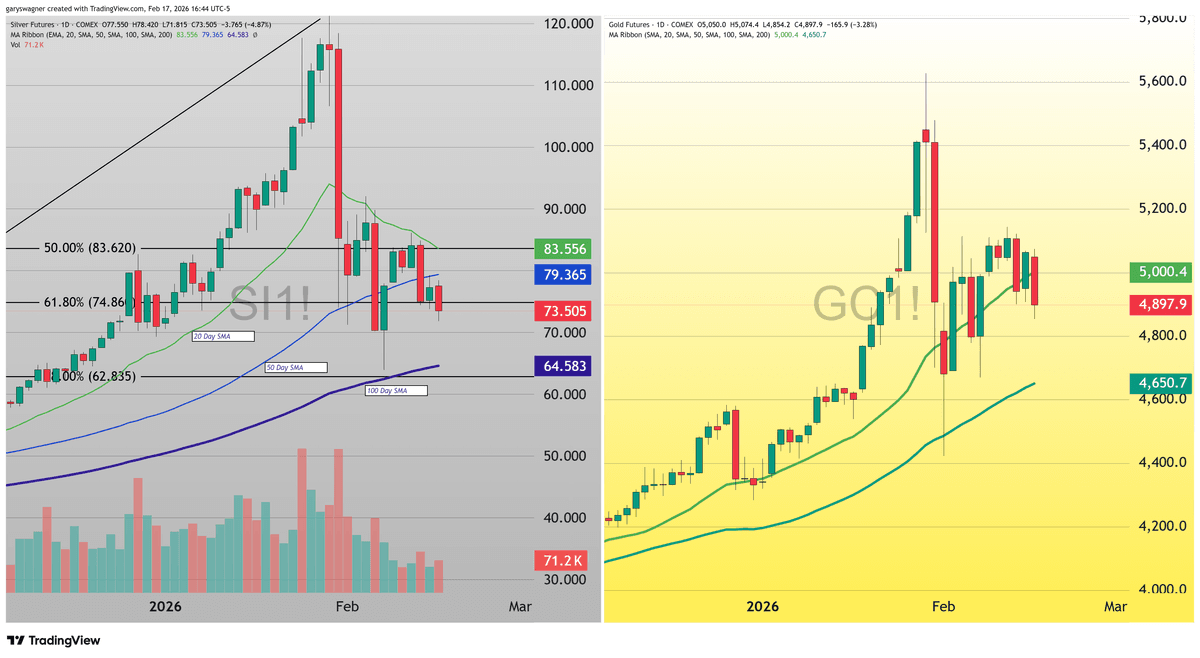
The proximate cause is the U.S. Dollar Index, which gained 0.6% to 97.49, making dollar-denominated commodities more expensive for overseas buyers and reducing the relative appeal of non-yielding assets like gold. The dollar's rebound is itself a product of recalibrated monetary policy expectations. January's softer inflation print had briefly raised hopes for an aggressive easing cycle — perhaps more than one rate cut in 2025. But subsequent data complicated that picture. Robust nonfarm payroll growth, firm private hiring, and continued projections of GDP expansion have collectively tempered the case for imminent Fed action, preserving U.S. rate differentials and underpinning the dollar's strength.
Seasonal factors have compounded the selling pressure. China's Lunar New Year holiday has taken the world's most significant source of physical gold demand temporarily offline, removing a layer of support at precisely the moment when financial flows were already turning against the metal.
Geopolitical risk has not disappeared. Renewed U.S.-Iran nuclear discussions and ongoing negotiations between Russia and Ukraine continue to provide some floor for safe-haven demand, and any breakdown in those talks could quickly reassert gold's defensive bid. But as Fawad Razaqzada of Forex.com observed, the near-term outlook "appears somewhat bearish following the recent volatility," with key data due later in the week likely to produce range-bound trading rather than a decisive directional move.
The more telling observation is structural: throughout this selloff, it has been the currency channel — not the geopolitical one — that has driven price action. When the dollar leads and rate expectations anchor it higher, gold's safe-haven narrative struggles to compete. Whether that dynamic persists depends on what the Fed signals next, and whether the economic data continues to disappoint the doves.
For those that would like more information about our services click here.
Wishing you as always good trading,
