
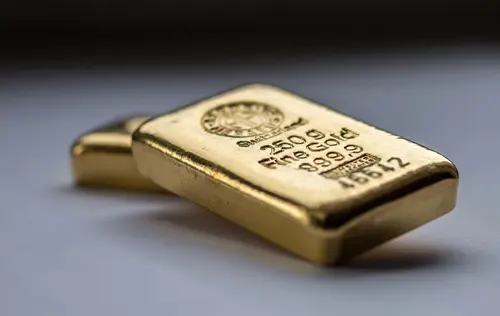
(Kitco News) - Surging momentum in the U.S. dollar and elevated bond yields are taking their toll on the precious metals market, with gold prices dropping below $4,000 an ounce and hitting a new low for the year.
Meanwhile, silver prices have fallen below $60 an ounce.
Although gold and silver's bear-market correction from their record highs in January has surprised some traders and analysts, Ewa Manthey, commodity analyst at ING, said in her latest precious metals report that the selloff highlights the extent to which markets have shifted their focus toward higher interest rates and tighter financial conditions.

Markets continue to react to the Federal Reserve's recent monetary policy meeting. Although the central bank left interest rates unchanged, it signaled support for a rate hike this year. Federal Reserve Chair Kevin Warsh also emphasized that price stability remains his top priority. Markets are pricing in a rate hike as early as September, and there are growing expectations of a second increase by December.
The market's aggressive tightening expectations have pushed the U.S. Dollar Index back above 100 points. The index is currently trading at 101.69, its highest level since May 2025.
Given the growing headwinds for gold, Manthey said ING is lowering its gold price forecast for the second half of the year.
"While we remain constructive on gold over the medium term, the near-term environment has become more challenging," she said.
ING now sees gold prices averaging $4,300 an ounce in the third quarter of 2026 and $4,600 an ounce in the fourth quarter, down from previous forecasts of $4,850 and $5,000, respectively.
Although the global financial institution does not expect the Federal Reserve to raise rates this year, Manthey suggested that investors shouldn't fight the market.
"Elevated yields and a strong dollar are likely to remain near-term headwinds for gold," she said. "Geopolitical tensions have failed to generate the type of safe-haven inflows seen during previous periods of uncertainty. Instead, markets have focused on the inflationary implications of geopolitical developments and what they could mean for monetary policy."
ING is also downgrading its silver price forecast. The investment firm expects silver to average $68 an ounce in the third quarter and $74 an ounce in the fourth quarter, down from previous forecasts of $79 and $84, respectively.
"While the silver market is expected to remain in deficit, some of the strongest demand drivers are becoming less supportive. Growth in solar demand is slowing, while continued thrifting and substitution in photovoltaic manufacturing are reducing silver intensity per panel," Manthey said.
Although gold and silver face a challenging environment through the second half of the year, Manthey said the market's structural fundamentals remain intact.
"Central bank demand remains robust, reserve diversification continues, and geopolitical risks remain elevated. However, higher yields and weaker investor demand are proving to be more powerful headwinds than we previously anticipated. Gold's correction has prompted a reset in our forecasts, but not in our broader view of the market," she said. "We continue to believe the structural drivers supporting gold remain intact, though the path higher is likely to be slower and more volatile than we previously expected. Despite the downgrade, we continue to expect silver to modestly outperform gold, supported by ongoing market deficits and broader electrification trends."
