
(Kitco Commentary) - Gold is trading near $4,300 per ounce Tuesday, coiled ahead of what may be the most consequential near-term data release of the year: Wednesday’s May consumer price index. With the Federal Reserve having held rates steady for months in the face of stubborn inflation, and markets increasingly pricing the possibility of hikes rather than cuts, a single CPI reading now carries enough weight to either extend the precious metal’s painful correction from its January all-time high or ignite the relief rally bulls have been waiting for.
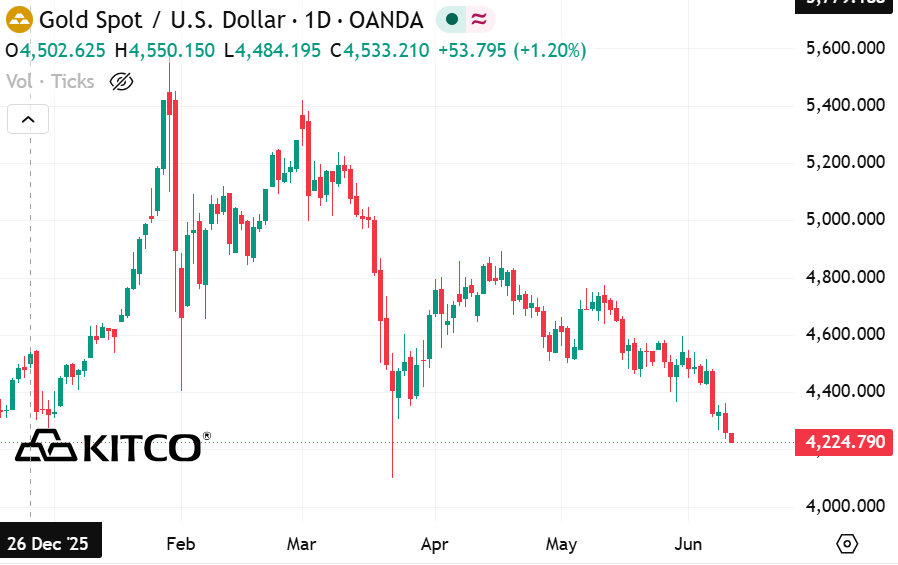
The stakes could hardly be higher. Gold set a record of $5,595 per ounce on January 29 and has since shed more than 22% of its value, driven largely by the collapse of rate-cut expectations and the easing of geopolitical tensions that had underpinned bullion through the first quarter. The April CPI reading of 3.8% year-over-year — the highest since May 2023, fueled by energy costs that spiked as the Iran-Israel conflict stoked supply fears — was the pivotal moment that began to turn the tide against gold. Now, with consensus calling for May’s headline rate to accelerate further to 4.2%, traders are bracing for a print that could do lasting damage to gold’s near-term outlook.
The bearish scenario is well-defined. A reading at or above the 4.2% consensus would confirm that inflation is not merely sticky but re-accelerating, a development that markets would almost certainly translate into intensified rate-hike expectations. Core CPI is already expected to remain lodged in the 3% to 4% range with limited disinflation progress, and headline figures risk ticking higher still as crude oil’s earlier surge passes through to consumer prices. Goldman Sachs, which last weekend removed all remaining 2026 rate cuts from its baseline and pushed its first expected cut back to June 2027, simultaneously raised the probability of a minor rate hike from 10% to 20%. BNP Paribas has gone further, now expecting the Fed to begin raising rates in December with hikes continuing into 2027. A hot CPI print Wednesday would validate both calls and send real yields sharply higher — the most direct mechanism through which rate expectations pressure gold. The $4,300 level, which has served as intermittent support since April, would immediately come under threat.
The bullish scenario is narrower but meaningful. For gold to mount a credible recovery, the May CPI would need to come in convincingly below expectations, signaling that April’s surge was an energy-driven aberration rather than the beginning of a new inflationary leg. A soft print would ease pressure on real yields, likely weaken the dollar, and restore at least some probability that the Federal Reserve retains optionality for a September cut — the dovish outcome that gold bulls have been clinging to. In such a scenario, bullion could recover toward the $4,500 area and enter next week’s Federal Open Market Committee meeting with genuine upside momentum rather than the defensive crouch it currently occupies.
The timing makes Wednesday’s release uniquely consequential because of what follows it. The FOMC convenes June 16–17 for the first meeting under new Fed Chair Kevin Warsh, who took the helm on May 15 following Jerome Powell’s departure. Warsh’s debut is a Summary of Economic Projections meeting, meaning traders will receive not just a rate decision but an updated dot plot and a fresh set of economic forecasts — the most complete signal the Fed can send about where rates are headed. The CPI and the FOMC together form a two-event sequence that will almost certainly define gold’s direction through the summer. Wednesday’s number sets the table; June 17 serves the meal. A hot CPI followed by a hawkish Warsh debut would be the worst-case combination for gold, potentially driving a sustained break below $4,300. A soft CPI followed by a measured, data-dependent tone from Warsh would represent the clearest path to a recovery.
May’s nonfarm payrolls report, which showed 172,000 new jobs added — well ahead of consensus — has already removed any serious probability of a June cut and reinforced the argument that the labor market is too resilient for the Fed to ease. That backdrop means the CPI now bears additional weight: it is the one variable left in this week’s data calendar that could meaningfully alter the policy calculus. The Producer Price Index follows on Thursday, offering a secondary read on wholesale cost pressures, but the direction will largely be set by Wednesday morning’s headline figure.
What has kept gold from a more disorderly decline is the persistence of structural demand that operates largely independent of short-term rate dynamics. The People’s Bank of China added approximately 9.95 tonnes in May, bringing its reserves to 2,331.52 tonnes, the 19th consecutive month of accumulation. Central banks globally purchased 1,237 tonnes in 2025, the third straight year exceeding 1,000 tonnes, and the World Gold Council reports that global demand reached a record $193 billion in the first quarter of 2026. These flows have provided a durable floor beneath each wave of the current correction, and gold remains more than 28% above its year-ago level even after the pullback from January’s peak.
Wednesday’s CPI arrives at 8:30 a.m. Eastern Time. For gold, the number is binary in its implications: confirmation of re-accelerating inflation tips the balance toward a more extended bear phase with $4,300 as the next line in the sand; a downside surprise opens the door to recovery ahead of the most consequential Fed meeting of the year. The structural bull market’s integrity remains intact by most measures, but in the near term, it is one inflation print that stands between gold and its next decisive move.
For those who would like more information about our services, click here.
Wishing you as always good trading,
